FDM Filament
Filament is the thermoplastic feedstock for FMD printers. There are many types of filament available with different properties. They normally come in 250g, 1kg, or larger spools, with a standard thread diameter of 1.75mm. I buy 1 kg spools in basic colors, with 250g for variety or to experiment.
PLA
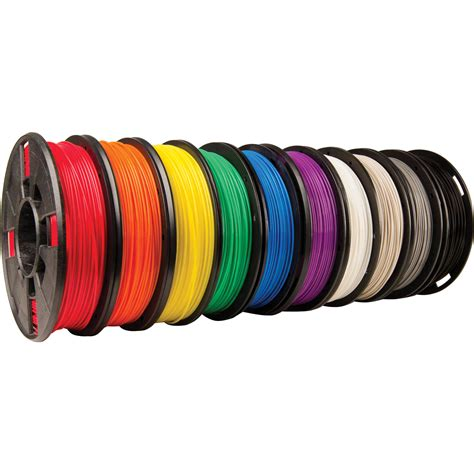 I print PLA almost exclusively. Polylactic acid is a polyester made from renewable biomass, typically from fermented plant starch like corn, cassava, sugarcane or sugar beet pulp. PLA is an excellent first product to utilize as you are learning because it is very easy to print, inexpensive, and creates components that can be made use of for a variety of applications.
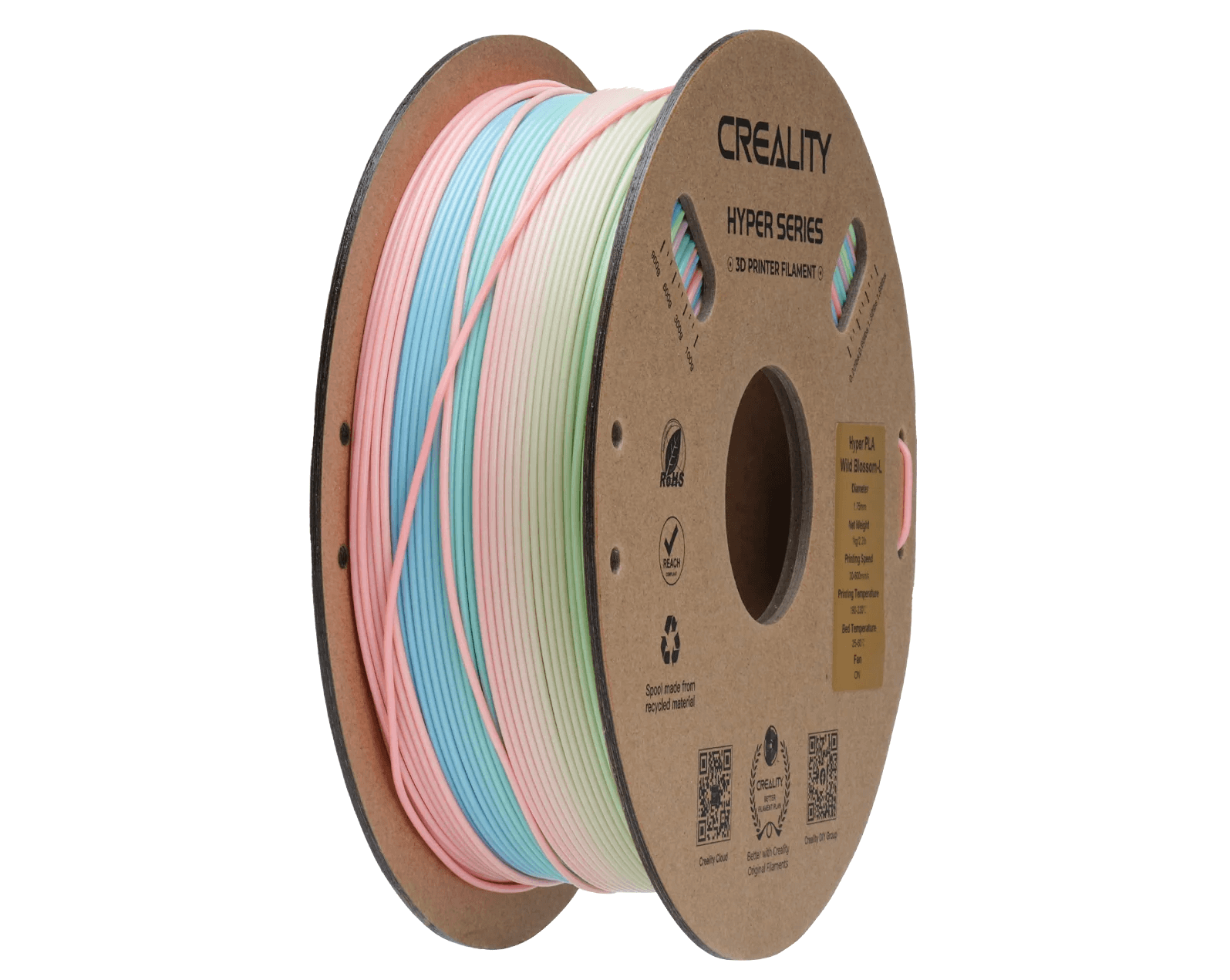 I normally use single-color filaments with a matte finish, but PLA comes in a rainbow of colors, shiny and silky finishes like metallics, and even in multi-color transitions like yarn (shown). In 2026, PLA costs about $15 per kilo. (I've also had luck with PLA+, but it contains additives and different brands use different additives, so they aren't interchangeable in terms of printer settings.)
Other materials
PETG
I've experimented with PETG (polyethylene terephthalate glycol), but tend to shy away from it because it's sticky, which leads to bed adhesion challenges and more frequent nozzle cleaning and replacement. The main use case I have for PETG is sun-exposed items, yet I've found that PLA doesn't crumble at the rate I'd been led to believe, at least in Colorado.
As a material, PETG is stiffer and more temperature resistant than PLA, without the fumes/toxicity of ABS/ASA/Nylon. That makes PETG prints my impact resistant and dimensionally consistent. Another drawback for me is that PETG, unlike PLA or regular PET, isn't recyclable due to the glycol.
You should utilize a releasing agent on a glass surface for PETG. Otherwise, you'll be having a chunk of glass in addition to your part! PETG adheres extremely well to blue painter's tape. Hairspray and gluestick also function well.
TPU
I've tried TPU (thermoplastic polyurethane), too, which is rubber-like at room temperature. 3D printed parts with TPU are durable, and have the ability to endure ambient temperature up to 80°C. However, I found I wasn't able to get more than the first couple layers printed before it turned to a gooey mess, likely due to absorbing too much moisture. Now that I have a filament dryer, I might try it again.
You must print TPU slowly, the maximum speed is about 25-30 mm/s. Keep retraction settings as low as possible, or the filament will get wrapped around the extruder. Try a retraction distance of 3mm to start, then increase by 0.2 mm at a time if you still have stringing issues. Pick a retraction rate of 25-30 mm/s. For bed adhesion, blue painter's tape works great. You can additionally use a raft or a border, but they're not crucial. Leave the cooling fan running.
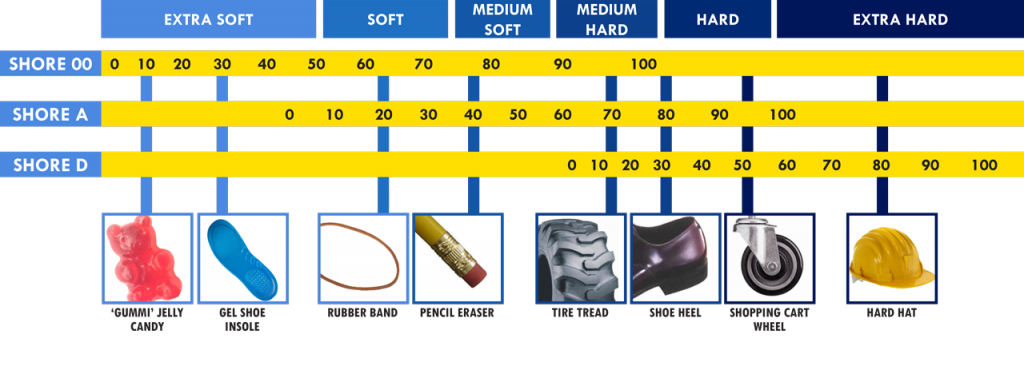
TPU is rated on the Shore scale for hardness.
ABS
ABS (Acrylonitrile Butadiene Styrene) has a long background in the 3D printing community, though I have no experience with it. It was among the first plastics to be made use of with industrial 3D printers. ABS is known for its toughness and impact resistance, permitting users to print sturdy parts that will hold up to additional usage and wear. LEGOs are made of ABS. I haven't tried ABS because the material gives off noxious and mildly toxic fumes when printing, so it requires good ventilation.
Brand quality
Here's a breakdown based on my experience:
- Great: Inland/eSun
- Good: Sunlu, Creality, Polymaker
- Fair: 3dgenius
- Poor: Kingroon
Inland is the Micro Center house brand, made by eSun.