STATIK
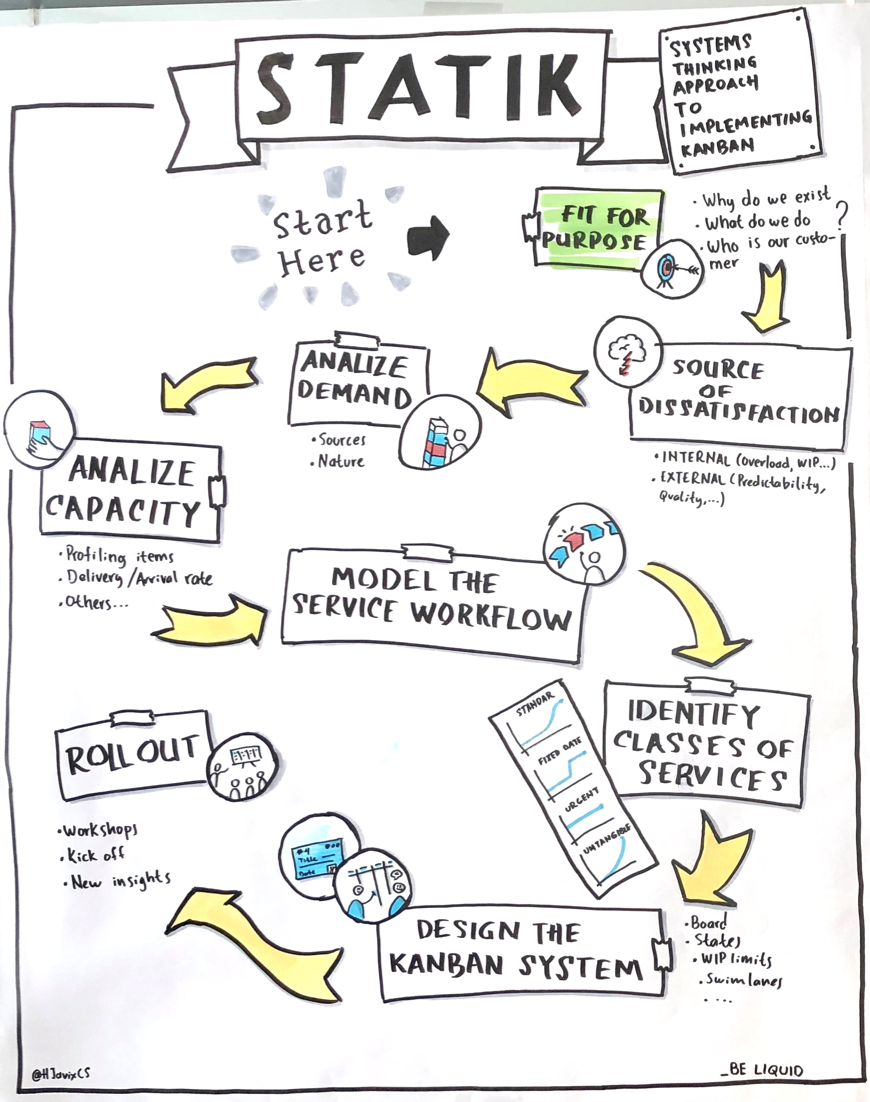 First learned of it from [redacted]. STATIK stands for System Thinking Approach to Implementing Kanban.
1. Understand the purpose of the system
- Understand the scope and objectives of a change
- Seek the perspective of those working in the system and those outside the system
2. Understand sources of dissatisfaction
- Capture internal and external frustrations from multiple perspectives
- Identify sources of variability
Checkpoint:
- Do you have at least a rough idea of the scope of the exercise? Does it have we're need sponsorship?
- Who should participate? Who represent the people who work inside the system boundary? Who will represent the systems customers? Does the whole organization need representation?
- What tools we use to solicit and organize a good range of responses?
3. Analyze demand and capability
- Identify work item types and patterns of demand. What you're delivering, to whom, and why.
- Describe and try to quantify how and how well demand is met. For each type of work, figure out:
- How does it arrive? Do you actively solicit it, wait for it to come, or something in between?
- At what rate does it arrive?
- … Doesn't arrive with regularity or randomly? (that is, can you predict its arrival?)
- … Does work arrive in large batches or bursts? Are there predictable seasonal variations?
- What are your key measures of success? How well do they align with customer outcomes?
Checkpoint:
- Are you ready to help capture the what, to whom, and why?
- Will you ask for data in advance, or will you wait to see what other participants want to do? What support can you provide?
- What do you are you know about how work arrives? What you have to people you need to explore this properly?
4. Model workflow
Visualizing and review the knowledge discovery process
Checkpoint:
- What is the preferred approach: sketch, top-down, bottom-up?
- Are you armed with searching questions for reviewing the output?
5. Discover classes of service
Within the systems capability, map service offerings to customer expectations
Checkpoint
- Would you get more traction approaching classes of service as an internal tool for organizing and scheduling work, or as a way to export customer expectations? How will you bring the two aspects together?
- At which organizational levels will this exercise be able to influence the overall mix of working system?
6. Design Kanban systems
Implement visualization, WIP limits, and policies.
Checkpoint
- How will you introduce the concept and share what is worked elsewhere? (if the workshop includes training, already answered)
- How much time will you want to spend refining designs before allowing them to be tried in the field?
- Physical or electronic? What limitations will need to be accommodated? (Physical, geography, organization, privacy and security, or feature-wise)
7. Rollout
- Planning and shaping
- Positioning, purpose, and priority (p 217)
- Pulling change through the system